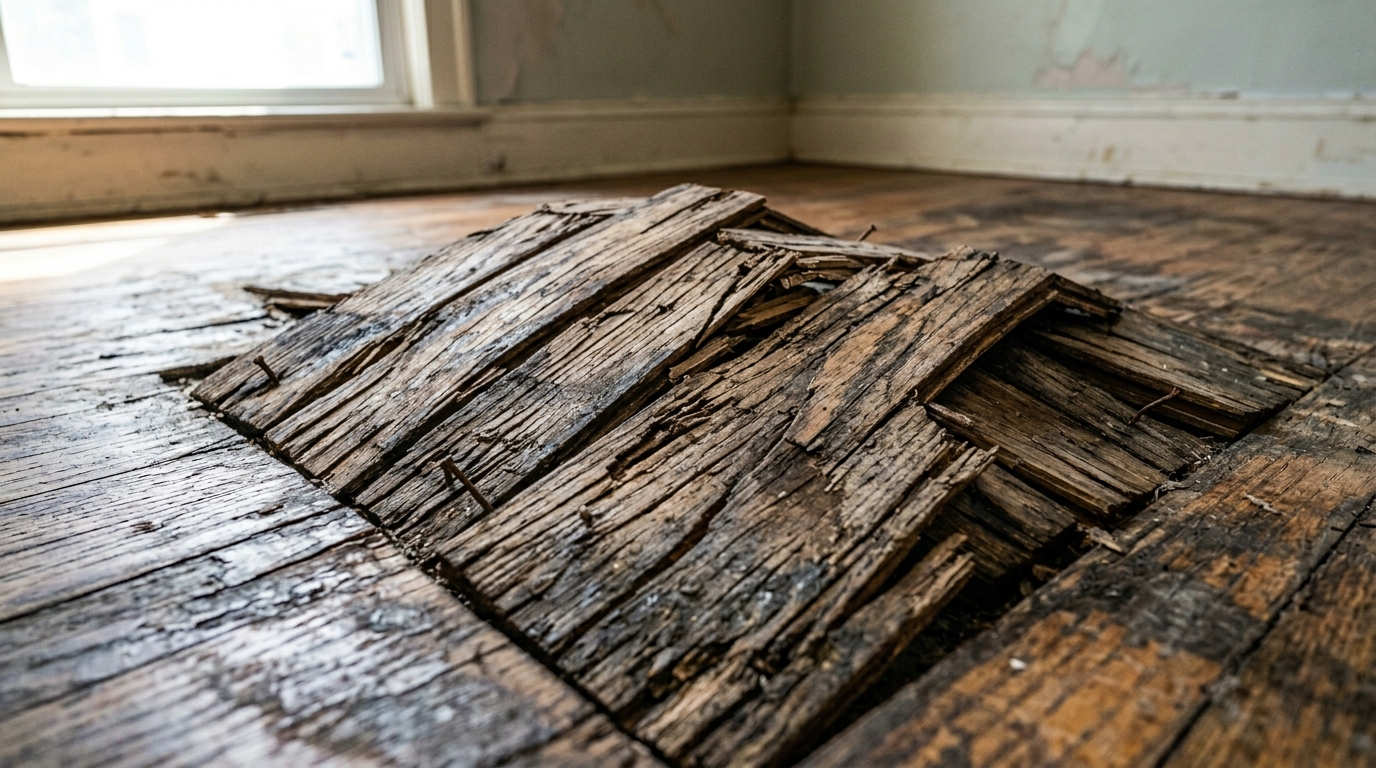
Flooring is one of the most heavily used components of any home, bearing the brunt of daily foot traffic, furniture movement, and accidental spills. When a property’s flooring begins to fail—whether it’s severely warped hardwood caused by a past leak, cracked or tenting ceramic tiles from a shifting foundation, or deeply stained carpet that has reached the end of its lifespan—the impact is immediate. Damaged flooring doesn’t just destroy a home’s visual appeal; it creates serious tripping hazards and often masks much deeper, more expensive issues lurking underneath.
For property owners in North Texas and Southwest Oklahoma, flooring failures are a remarkably common headache. The regional combination of high humidity, flash flooding, and shifting clay soils constantly puts floors to the test.
When a house requires whole-home floor replacement, many homeowners consider listing the property on the retail market to escape the burden. However, trying to sell a home with compromised flooring through traditional channels is an uphill battle. Let’s look honestly at the obstacles of listing a home with flooring deficiencies and explore why selling directly to a local cash home buyer is often the smartest, most practical path forward.
The Hidden Roadblocks of the Traditional Retail Market
When you list a home with a real estate agent on the Multiple Listing Service (MLS), you are marketing to retail buyers who want a safe, comfortable, and functional space they can move into immediately. If your property has widespread flooring issues, the conventional transaction pipeline hits three major roadblocks:
1. The Immediate “First Impression” Discount
Flooring is one of the very first things a buyer notices when they step through the front door. If they are greeted by buckled planks, stained carpets, or cracked tile grids, their perception of the entire house is instantly tainted.
Because retail buyers typically lack construction experience, they tend to vastly overestimate the cost of new flooring. If replacing the floors actually costs $8,000, a retail buyer will look at the damage and mentally deduct $15,000 to $20,000 from their offer price to compensate for the “hassle” and visual layout shock.
2. The Danger of Subfloor Surprises
Flooring issues are rarely just skin-deep. When a contractor pulls up warped hardwood or cracked tile, they frequently discover hidden structural nightmares beneath—such as rotted plywood subfloors, cracked concrete slabs, active mold colonies, or unresolved plumbing leaks.
If you list your home traditionally, a buyer’s inspector will flag these uneven floors as a major red flag, demanding a structural engineering assessment. If hidden subfloor rot is uncovered midway through a conventional contract, your repair bills can skyrocket out of pocket, or the buyer can walk away entirely, leaving your listing dead in the water.
3. The Government Financing Barrier
For everyday buyers trying to purchase a home using government-backed financing like FHA or VA loans, strict minimum property standards apply. Appraisers and inspectors for these programs are highly sensitive to safety hazards.
If a home features heavily cracked tiles with sharp edges, exposed carpet tacks, or severely uneven walking surfaces from buckled wood, the underwriter will mandate that the floors be completely repaired or replaced before the bank will fund the mortgage. If you do not have the liquid cash to install new floors before closing, your home cannot be sold to the vast majority of retail buyers.
Real-World Case Studies: Listing vs. A Direct Cash Sale
To truly see the benefits of skipping the traditional real estate agent path, let’s examine two contrasting real-world scenarios based on common market experiences in our primary territories.
Case Study A: The Traditional Listing Renovation Trap (The DFW Metroplex)
A homeowner in the Dallas/Fort Worth area inherited a property that had original, cracked saltillo tile throughout the living spaces and heavily pet-stained carpet in the bedrooms. An agent convinced them to list it on the MLS to see if a family would buy it as a “cosmetic fixer-upper.”
- Month 1–2: The home is listed, and dozens of buyers tour the property. Feedback is completely uniform: buyers are overwhelmed by the thought of jackhammering out hundreds of square feet of thick tile. The home sits for 60 days with zero offers.
- Month 3: The owner decides to pay $10,000 out of pocket to have the floors replaced to attract a buyer. However, when the laborers tear up the tile, they discover a massive foundation crack that has sheared the concrete slab, requiring a full foundation repair project first.
- Month 5: After spending thousands more on foundation stabilization, drywall patching, and final flooring, the house is relisted.
- Month 7: The house finally closes. After subtracting the massive out-of-pocket construction costs, unexpected slab repair fees, holding costs, and the agent’s 6% commission, the owner netted significantly less money than if they had sold it completely as-is on day one.
Case Study B: The Swift Cash Resolution (Lawton, Oklahoma)
A property owner in Lawton, Oklahoma, owned a vacant rental home where an old hot water heater leak had gone unnoticed for weeks, completely warping the hardwood flooring across the hallway and living room. The owner lived out of state and lacked the time or desire to source local flooring contractors.
- Day 1: The owner contacts a direct cash home buyer via a simple online form.
- Day 2: A local property coordinator reviews the neighborhood data and performs a rapid, non-invasive walkthrough to assess the scope of the water damage and subfloor condition.
- Day 3: The company extends a firm, transparent all-cash offer. The valuation accounts for the full floor removal, subfloor reconstruction, and cosmetic updates internally, requiring $0 from the seller’s wallet.
- Day 5: The owner accepts the offer. Because the cash buyer uses private liquid capital, no bank underwriting guidelines, mortgage appraisers, or mandatory utility code clearances are required to close the file.
- Day 11: The transaction closes smoothly at a trusted local title company. The seller walks away with cash in hand in less than two weeks, completely free from the physical and financial liability of a ruined interior.
Why a Direct Cash Buyer is Your Cleanest Strategy
When you sell your property directly to an established investment company like ours, you completely bypass the friction, delays, and out-of-pocket costs of the traditional retail market. We specialize in taking on the property risks that terrify everyday buyers and their banks:
We Buy 100% As-Is (Leave the Flooring Mess to Us)
When we say we buy houses completely as-is, we mean it. You do not need to hire demolition crews, jackhammer old tile, pull up stinky carpet, or repair rotted subfloors. If we find hidden structural slab damage or subfloor rot after the purchase, that is entirely our financial problem, not yours. Take only what you want from the home, leave the interior headaches behind, and move on.
Zero Out-of-Pocket Commissions, Closing Costs, or Fees
Selling a home through a traditional real estate agent means giving up roughly 6% of your final sale price to agent commissions, plus another 2% to 3% in title fees and buyer closing costs. When a property’s value is already adjusted for interior deficiencies, losing an additional 8% to 10% to transaction fees cuts deep. We charge no commissions and cover all standard closing costs, ensuring you keep the exact amount of cash promised in our written offer.
Bypassing Project Creep and Contractor Drama
Managing a flooring or subfloor restoration project yourself is incredibly stressful. Material delivery delays, rising labor costs, and hidden structural damage frequently cause budgets to break. Every month your house sits under construction is another month you must pay mortgage interest, property taxes, and insurance. When you sell to us, we assume 100% of the construction and holding risks.
Take Back Your Financial Freedom
Damaged or outdated flooring shouldn’t hold your financial future hostage. You do not have to let a sluggish, traditional real estate market or expensive out-of-pocket contractor bills dictate your recovery timeline.
If you are ready to skip invasive home inspections, avoid the nightmare of out-of-pocket construction costs, and sell your property on a timeline that you completely control, a direct cash sale is your cleanest path forward.
To see exactly how our direct buying model cuts out the middleman and learn more about our transparent valuation structure, take a moment to review our comprehensive guide on how we operate as a direct home buying company. We believe in providing clear operational facts so you can make an empowered decision for your family.
For homeowners dealing with interior or structural issues in North Texas, you can connect directly with our regional underwriting team by visiting our trusted real estate investors platform for the DFW metroplex to request a rapid, hassle-free property assessment. If your property is located across the Oklahoma border and requires fast local action, our team is ready to provide an immediate solution through our dedicated cash home buyers hub in Lawton.
You don’t have to carry the burden of a damaged house alone. Let us buy the property as-is, take on the structural and flooring risks, and put cash in your pocket so you can move forward into your next chapter with absolute certainty.