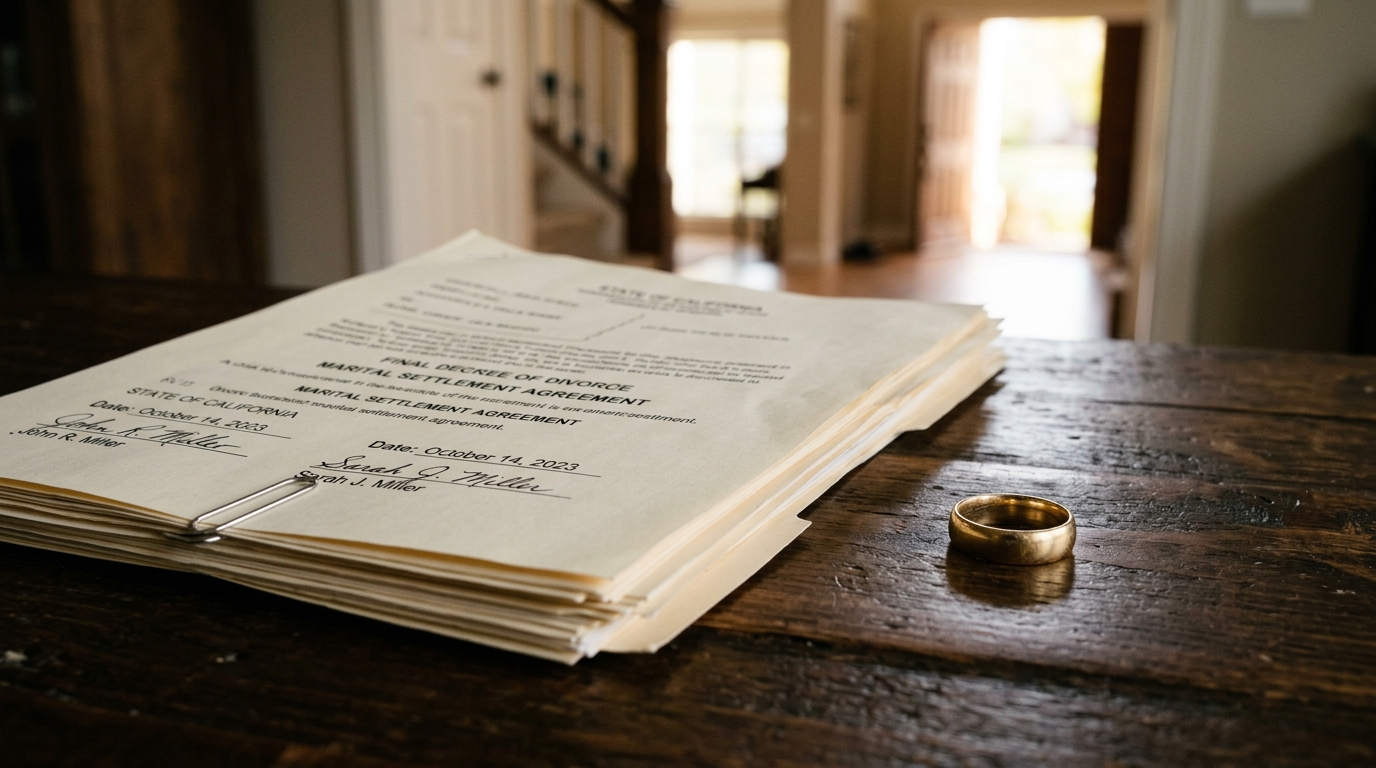
Going through a divorce is undeniably one of the most emotionally trying and legally complex transitions a person can experience. Amidst the difficult emotional adjustments and restructuring of family dynamics, couples are forced to make massive, high-stakes financial decisions. Chief among these decisions is the division of marital assets—and for most couples, the family home represents their largest shared investment.
For property owners navigating a divorce in North Texas or Southwest Oklahoma, dividing real estate quickly becomes a focal point of logistical friction. The house is often tied to deep sentimental memories, making it a highly emotionally charged asset.
When a court order or mutual agreement mandates the division of property, the default reaction is usually to hire a traditional real estate agent, list the home on the retail market, and split the proceeds. However, trying to manage a conventional property listing while navigating a divorce frequently prolongs the legal gridlock, amplifies conflict, and drains vital financial resources. Let’s look honestly at the hidden pitfalls of listing a home during a split and explore why selling directly to a local cash home buyer is often the most practical, peaceful, and logical path to a clean break.
The Relational and Financial Trap of the Traditional MLS
When you list a home on the Multiple Listing Service (MLS), you are entering a slow, highly collaborative process that requires constant, synchronized decision-making from both parties. If communication between separating spouses has broken down, a traditional real estate sale can stall out due to three major roadblocks:
1. The Forced Cooperation Stalemate
A traditional home sale demands constant cooperation. Both parties must agree on hiring a specific listing agent, deciding on an initial asking price, evaluating incoming offers, determining who will pay for recommended repair items, and keeping the home in pristine “showing condition” for unexpected open houses.
If one spouse refuses to sign a listing agreement, delays returning paperwork out of spite, or intentionally neglects property maintenance, the entire transaction grinds to a halt. This forced interaction keeps both individuals legally and emotionally tethered to one another, preventing them from truly moving forward with their separate lives.
2. The Bleeding of Marital Assets via Holding Costs
Traditional real estate transactions are notoriously slow, often taking 60 to 90 days from listing to closing—assuming a qualified retail buyer is found immediately. During this multi-month window, the home’s ongoing expenses do not pause.
The mortgage payments, property taxes, structural insurance premiums, and utility bills must continue to be paid. In a divorce, where both individuals are typically trying to finance two separate new households simultaneously, maintaining the holding costs on a shared, vacant marital home can quickly drain savings accounts and spark intense arguments over who is financially responsible for the bills.
3. The Risk of Retail Financing Collapse
Even if both parties successfully cooperate to secure a retail buyer, the contract remains highly fragile until the very last minute. Retail buyers rely on conventional bank underwriting, FHA guidelines, or VA loans that require strict appraisals and intensive home inspections.
If the buyer’s financing falls through on day 45 because of an underwriting issue, or if the bank demands a $10,000 out-of-pocket roof repair before releasing funds, the deal collapses. For a divorcing couple, a failed contract means starting the stressful staging, marketing, and negotiation process all over again from square one.
Real-World Case Studies: Listing vs. A Direct Cash Sale
To see how a direct cash sale can eliminate conflict and protect your financial equity during a split, let’s examine two contrasting real-world outcomes.
Case Study A: The Traditional Listing Legal Nightmare (The DFW Metroplex)
A couple in the Dallas/Fort Worth area filed for divorce and agreed to sell their suburban home to divide the equity evenly. They hired a traditional real estate agent and listed the home on the MLS.
- Month 1–2: The home receives several viewings, but requires constant coordinate-scheduling because one spouse has already moved out while the other remains in the property. A solid offer is made, but the spouses argue intensely for two weeks over whether to accept a $5,000 price concession, causing the buyer to get frustrated and walk away.
- Month 3: A second buyer puts in an offer. The home inspector flags a dated electrical panel and a minor plumbing leak. The spouse living in the house refuses to allow contractors inside for quotes, while the out-of-state spouse refuses to fund any repairs out of pocket.
- Month 5: The dispute escalates, requiring both individuals to pay their divorce attorneys additional hourly fees to draft formal legal motions just to resolve the property repair dispute.
- Month 7: The house finally closes after seven months of severe emotional stress, continuous double mortgage exposure, and thousands of dollars wasted on legal fees and real estate commissions.
Case Study B: The Immediate Cash Resolution (Lawton, Oklahoma)
A couple splitting up in Lawton, Oklahoma, recognized that their communication was severely strained and that they needed a fast, clean break to minimize emotional damage and protect their respective credit scores. They chose to completely bypass the traditional retail market.
- Day 1: One party fills out a simple online form with an established direct cash home buyer.
- Day 2: A local property coordinator reviews the local neighborhood data and coordinates a single, discreet, non-invasive walkthrough of the house.
- Day 3: The company presents a firm, transparent all-cash offer. The valuation is clear, featuring no hidden corporate fees, deductions, or repair mandates.
- Day 5: Both spouses review the offer independently with their respective legal counsel and sign the purchase agreement. They select a guaranteed closing date just 10 days away.
- Day 15: The transaction closes smoothly at a reputable local title company. The cash buyer wires the funds directly into the designated court-approved escrow account for immediate, clean distribution. Both individuals walk away with cash in hand in less than two weeks, completely cutting their real estate ties without a single public open house.
Why a Direct Cash Buyer is the Most Peaceful Exit Strategy
When you sell your marital property directly to an established investment firm like ours, you eliminate the emotional friction and uncertainty of the traditional retail market. We specialize in providing a clean, quiet transaction that respects your privacy:
A Single Walkthrough and a Guaranteed Timeline
Traditional listings require a constant stream of strangers, nosy neighbors, and agents trampling through your home for open houses and private showings week after week. When you sell to us, we require exactly one brief walkthrough. We bypass the entire retail pipeline, closing the deal in as little as 7 to 10 days. This rapid timeline allows both parties to liquidate the asset immediately, distribute the funds, and establish their new independent living situations.
We Buy 100% As-Is (No Repair Arguments)
One of the biggest sources of conflict during a divorce is deciding who will pay for or manage the home repairs required to make a house market-ready. We buy houses completely as-is. You do not need to paint walls, deep-clean carpets, fix roofs, or stage rooms. We assume all property risks and remodeling costs internally after closing, meaning neither spouse has to spend another dime out of pocket.
Zero Commissions or Joint Transactional Fees
Traditional real estate sales force you to hand over roughly 6% of your final sale price to agent commissions, plus another 2% to 3% in title fees and buyer closing costs. When you are trying to maximize your individual capital to rebuild your life, losing 8% to 10% of your equity to transaction fees hurts. We charge no commissions and cover all standard closing costs, ensuring you keep the maximum amount of cash possible from your home’s equity.
Secure Your Clean Break and Move Forward
A divorce is difficult enough without the added weight of a slow-moving, high-conflict traditional real estate transaction. You do not have to let an unpredictable market or ongoing property disputes hold your personal and financial freedom hostage.
If you are ready to secure a guaranteed sale, eliminate the stress of ongoing holding costs, and divide your primary asset on a timeline that you completely control, a direct cash sale is the most reliable tool available to ensure a graceful exit.
To see exactly how our direct home-buying model eliminates the friction of the traditional market, take a moment to look over our transparent guide explaining how the direct cash-buying process works. We lay out the entire framework clearly so you and your legal team can make an informed, confident decision.
For property owners navigating a separation or divorce in North Texas, you can reach our localized underwriting team directly by visiting our trusted real estate investors page for the DFW area to request a rapid, no-obligation cash evaluation. If your property is located across the Oklahoma line and you require a discreet, rapid closing solution, our team is standing by to assist you through our dedicated home buying company in Lawton.
You don’t have to navigate this transition in circles. Let us buy the property as-is, take on the transaction risks, and provide the clean cash distribution you need to turn the page and step into your next chapter with absolute peace of mind.