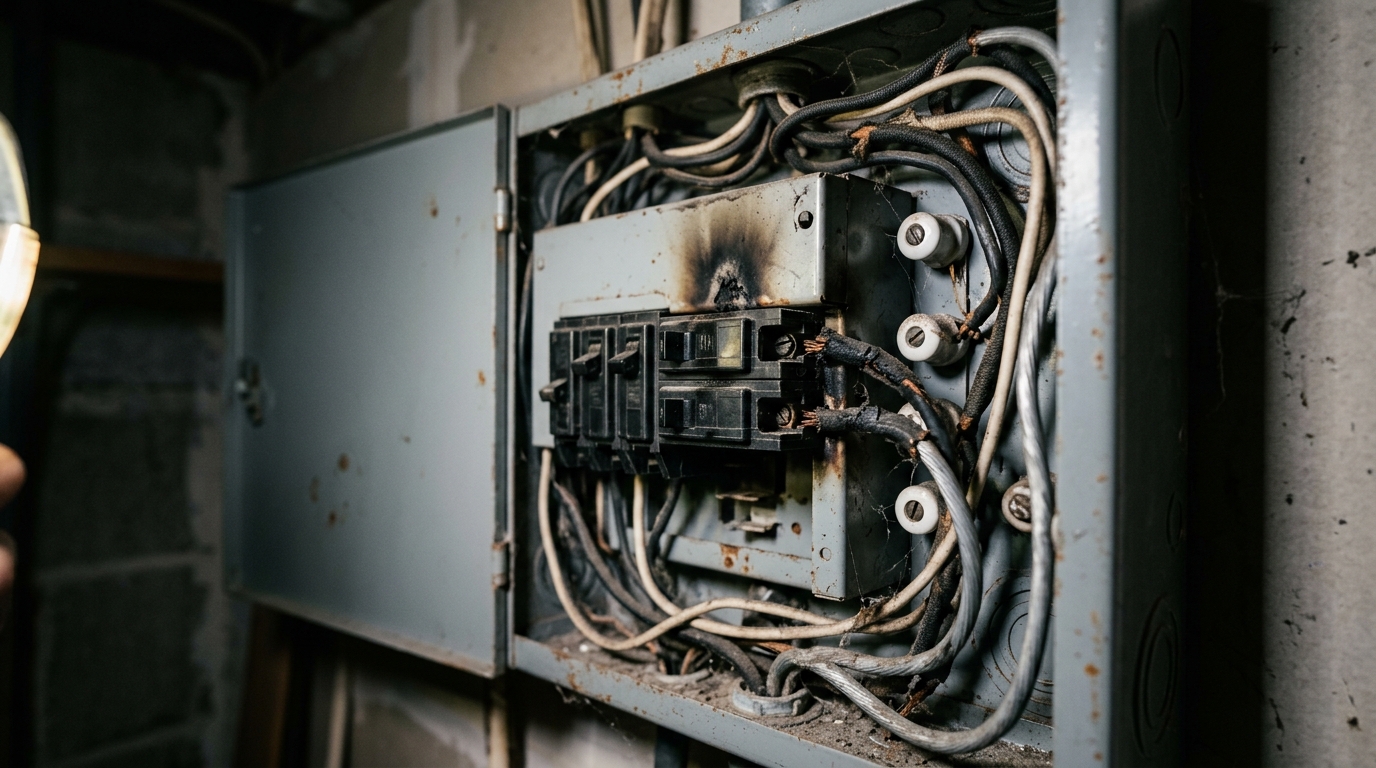
A home’s electrical system is its invisible nervous system, pulsing silently behind your drywall to power every modern convenience. When that system begins to degrade, malfunction, or fall out of safety code compliance, it transforms from a household utility into an immediate, severe hazard. Whether it’s the lingering presence of vintage knob-and-tube wiring, brittle aluminum circuits from the 1970s, a recalled federal pacific panel, or frayed wires damaged by rodents, electrical issues are a leading cause of residential property losses.
For property owners in North Texas and Southwest Oklahoma, navigating severe electrical deficiencies can feel completely overwhelming. Unlike cosmetic upgrades or minor carpentry work, electrical failures aren’t projects you can casually fix yourself on a weekend. They require licensed specialists, expensive permits, and invasive construction.
When facing a massive rewiring bill, many homeowners look to sell the property through a traditional real estate agent to pass the torch. However, trying to sell a home with active or outdated electrical systems on the retail market often leads to an administrative and financial wall. Let’s look at the hidden realities of listing an electrically compromised home and explore why a direct cash sale is often the most practical, stress-free path forward.
The Hidden Roadblocks of the Traditional Retail Market
When you hire a real estate agent to list your property on the Multiple Listing Service (MLS), you are primarily opening your doors to retail buyers who rely on traditional mortgage financing. If your property has known or suspected electrical failures, the conventional selling process hits several immediate obstacles:
1. The Home Inspection Red Flag
Every traditional real estate transaction involves a rigorous home inspection. A certified home inspector will systematically remove your electrical panel cover, check your outlets for proper grounding, trace exposed lines in the attic, and look for dangerous double-tapped breakers.
If they discover an outdated ungrounded system, un-permitted DIY wiring, or a fire-hazardous breaker box, it will be flagged as a critical safety defect in their report. Under disclosure laws, once these systemic safety failures are officially documented, you are legally required to disclose them to every future buyer, destroying your bargaining leverage overnight.
2. The Insurance and Mortgage Blackout
Even if you find a buyer willing to purchase the property as-is, their mortgage company and insurance provider will rarely allow the transaction to move forward. Traditional lenders—including those backing conventional, FHA, and VA loans—require a home to be fully insurable to clear the loan.
The vast majority of home insurance companies will refuse to write a policy on a house with known knob-and-tube wiring, aluminum branch circuits, or un-permitted electrical work. Without an insurance policy, the bank will deny the mortgage completely. This eliminates nearly 90% of your retail buyer pool, leaving only cash buyers as viable options anyway.
3. The Destructive Nature of Rewiring
Fixing a whole-house electrical issue is rarely a clean job. To replace outdated wiring, an electrician must cut access holes into your drywall, plaster, and ceilings throughout the entire property to fish new Romex cables through the framing.
What begins as an expensive $12,000 to $20,000 electrical quote frequently triggers a secondary wave of costly repairs, requiring you to pay thousands more out of pocket for professional drywall patching, textures, and whole-house painting just to make the home look presentable to retail buyers again.
Real-World Case Studies: Listing vs. A Direct Cash Sale
To truly see the benefits of skipping the traditional real estate agent path, let’s examine two contrasting real-world scenarios based on common market experiences in our primary territories.
Case Study A: The Traditional Listing Dead-End (The DFW Metroplex)
A homeowner in the Dallas/Fort Worth area inherited an older suburban property. The home was structurally sound, but featured an outdated 1960s electrical panel and ungrounded two-prong outlets throughout. An agent convinced them to list it on the MLS to see if an investor or retail buyer would take it on.
- Month 1–2: The home receives a flurry of initial traffic due to the neighborhood. A young family makes a strong offer, and a contract is signed.
- Month 3: The buyer’s home inspector flags the panel as a severe fire hazard. The buyer’s insurance company refuses to issue a policy until the entire house is rewired and grounded. The buyer does not have the liquid cash to fix it post-close, and the bank cancels the loan. The contract falls through.
- Month 4: The seller gets quotes to upgrade the panel and outlets, discovering it will cost $15,000 and involve cutting into the historical plaster walls. The seller doesn’t have the out-of-pocket savings to fund the project while paying the ongoing mortgage and utilities.
- Month 6: After half a year of delays, stress, and failed contracts, the seller is forced to take a massive price cut on the MLS to attract a cash investor, netting far less than if they had skipped the traditional market altogether.
Case Study B: The Swift Cash Resolution (Lawton, Oklahoma)
A property owner in Lawton, Oklahoma, owned a vacant rental home where an active rodent problem had resulted in chewed, exposed wiring in the attic, causing half the house to lose power. The owner had zero desire to manage a complex utility repair or coordinate with local code inspectors from afar.
- Day 1: The owner contacts a direct home-buying company via a simple online form.
- Day 2: A local property coordinator reviews the neighborhood data and performs a rapid, non-invasive walkthrough to assess the property’s overall footprint.
- Day 3: The company extends a firm, transparent all-cash offer. The valuation accounts for the full electrical overhaul and drywall restoration costs internally, requiring $0 from the seller’s wallet.
- Day 5: The owner accepts the offer. Because the cash buyer uses their own liquid capital, no bank underwriting guidelines, mortgage appraisers, or mandatory electrical code clearances are required to close the file.
- Day 11: The transaction closes smoothly at a trusted local title company. The seller walks away with cash in hand in less than two weeks, completely free from a house that was a constant source of anxiety.
Why a Direct Cash Buyer is Your Cleanest Strategy
When you sell your property directly to an established investment company like ours, you bypass the entire stressful ecosystem of traditional real estate. We specialize in taking on the structural and mechanical risks that terrify everyday retail buyers:
We Buy 100% As-Is (Leave the Electrical Hazards to Us)
When we say we buy houses completely as-is, we mean it. You do not need to hire an electrical contractor, pay for expensive code certifications, or patch a single sheet of drywall. If the entire house needs a brand new panel, meter base, and complete rewiring after the purchase, that is entirely our financial problem, not yours. You take what you want from the home, leave the utility headaches behind, and move on.
Zero Out-of-Pocket Fees, Commissions, or Closing Costs
Listing a home with a traditional real estate agent requires you to hand over roughly 6% of the final sale price to agent commissions, plus another 2% to 3% in closing fees and title costs. When your property’s value is already adjusted for utility deficiencies, losing an additional 8% to 10% to transaction fees cuts deep into your remaining equity. We charge zero commissions and cover all standard closing costs, ensuring you keep the exact amount of cash promised in our written offer.
Bypassing Project Creep and Code Enforcement
Electrical repairs are heavily regulated by local city code enforcement. If an electrician pulls a permit to fix one issue, local code inspectors can mandate that you upgrade the entire house to modern building codes—including installing expensive arc-fault breakers and hardwired smoke detectors. When you sell directly to us, we assume 100% of the construction and municipal risks.
Take Back Your Peace of Mind
An outdated or malfunctioning electrical system shouldn’t hold your financial future hostage. You do not have to let a sluggish, traditional real estate market or expensive utility contractors dictate your recovery timeline.
If you are ready to skip invasive home inspections, avoid the nightmare of out-of-pocket construction bills, and sell your property on a timeline that you completely control, a direct cash sale is your cleanest path forward.
To see exactly how our direct buying model cuts out the middleman and learn more about our transparent valuation structure, take a moment to review our comprehensive guide on how to sell a house fast to reputable cash home buyers. We believe in providing clear operational facts so you can make an empowered decision for your family.
For homeowners dealing with utility or repair issues in North Texas, you can connect directly with our regional underwriting team by visiting our trusted real estate investors hub for the DFW area to request a rapid, hassle-free property assessment. If your property is located across the Oklahoma border and requires fast local action, our team is ready to provide an immediate solution through our dedicated home buying company in Lawton.
You don’t have to carry the burden of a damaged house alone. Let us buy the property as-is, take on the structural and electrical risks, and put cash in your pocket so you can move forward into your next chapter with absolute certainty.