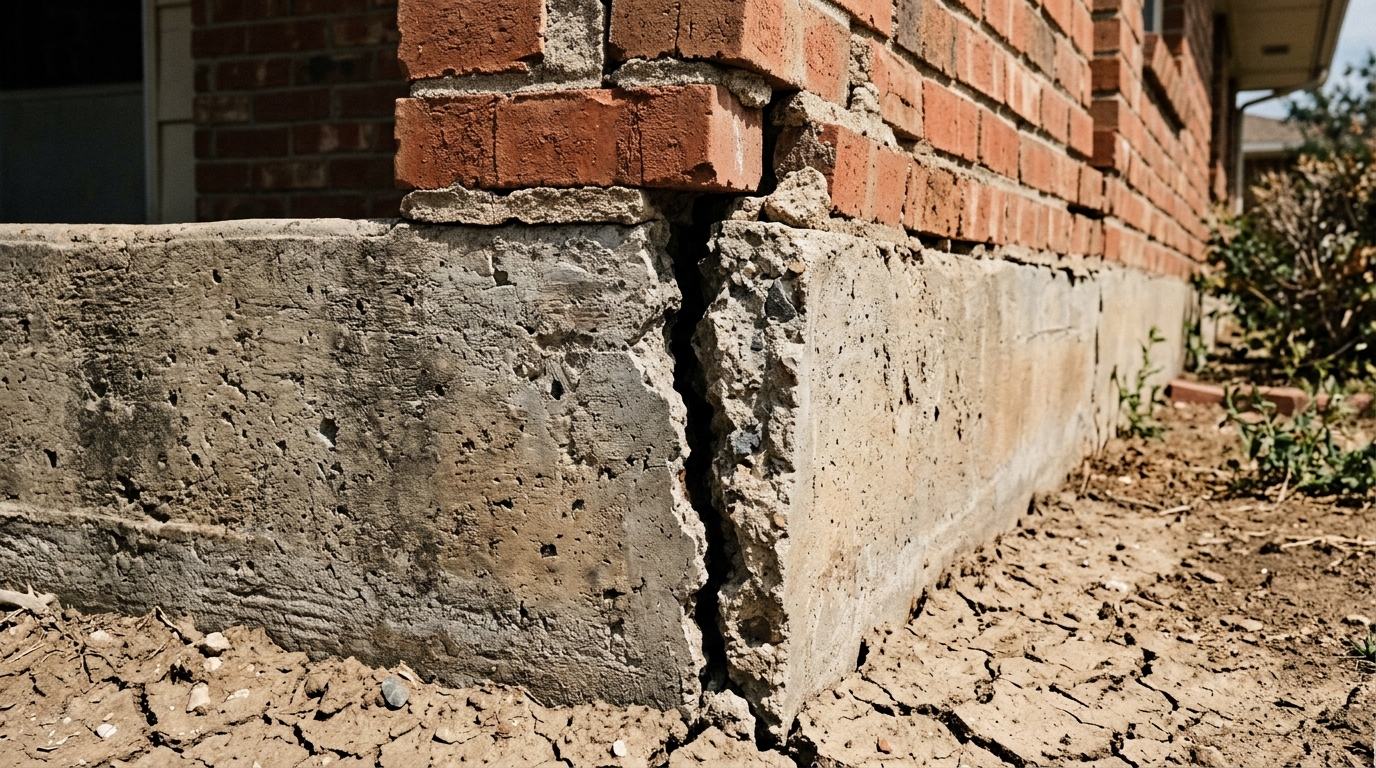
A home’s foundation is its literal bedrock—the silent, structural baseline that supports the entire weight of the framing, roof, walls, and interior finishes. When a foundation begins to fail, settle, or shift, it sends a destructive ripple effect throughout the entire house. What starts as an innocent hairline fracture on an exterior wall can quickly transform into buckled floors, doors that refuse to latch, severely cracked drywall, and compromised plumbing lines hidden beneath the concrete slab.
For property owners in North Texas and Southwest Oklahoma—regions notoriously famous for expansive clay soils that shrink and swell violently with changing seasons—foundation movement is an incredibly common and terrifying reality. Repairing a compromised slab or pier-and-beam system is one of the most invasive and expensive capital improvements a homeowner can face.
When a property suffers widespread structural shifting, many homeowners instinctively want to list it on the retail market to pass the torch. However, trying to sell a house with active foundation issues through traditional real estate channels is an incredibly steep uphill battle. Let’s look honestly at the obstacles of listing a structurally compromised home and explore why selling directly to a local cash home buyer is often the smartest, most practical path forward.
The Structural Trap: Why the Traditional MLS Fails Foundation Issues
When you list a home with a traditional real estate agent on the Multiple Listing Service (MLS), you are marketing to retail buyers who rely on standard mortgage financing. If your property has a documented or visible foundation failure, the conventional transaction pipeline hits three massive obstacles:
1. The Home Inspector and Engineering Blockade
Every traditional real estate transaction involves a rigorous home inspection. If a certified home inspector notices sloping floors, stair-step cracks in your exterior brick, or sticking doors, they will instantly flag the foundation as a critical safety defect.
Under standard retail contract guidelines, this automatically triggers a mandatory evaluation by a licensed structural engineer. Once an engineering report officially documents structural failure, that report becomes a permanent part of the home’s disclosure file, destroying your negotiating leverage with any future retail buyers.
2. The Total Mortgage Financing Blackout
This is the single biggest hurdle to selling a structurally compromised home on the open market. Traditional lenders—including those backing conventional bank loans, FHA guidelines, and VA programs—have incredibly strict rules regarding safety and structural soundness.
If an appraisal or engineering report notes active foundation failure, the underwriter will flatly deny the mortgage loan. The bank will refuse to release a single dollar of funding until a licensed structural contractor lifts the home, installs steel or concrete piers, stabilizes the slab, and provides a transferable warranty. If you do not have $15,000 to $30,000 in liquid savings to pay for structural contractors upfront, your home cannot be sold to a retail buyer.
3. The Unpredictable Scope of “Slab Leak” Surprises
Foundation repair is rarely a standalone project. When a heavy concrete slab shifts or gets mechanically lifted back into place by hydraulic jacks, the plumbing pipes running underneath the concrete are put under immense stress.
Frequently, structural leveling causes older cast-iron or PVC sewer and freshwater lines to crack or snap. What begins as an already expensive foundation repair project can instantly trigger a secondary wave of costly plumbing failures, requiring you to fund thousands more out of pocket for under-slab tunneling and pipe replacement just to clear the buyer’s inspection.
Real-World Case Studies: Listing vs. A Direct Cash Sale
To truly see the benefits of skipping the traditional real estate agent path, let’s examine two contrasting real-world scenarios based on common market experiences in our primary territories.
Case Study A: The Traditional Listing Structural Trap (The DFW Metroplex)
A homeowner in the Dallas/Fort Worth area decided to sell their long-term family home. They knew the living room sloped slightly, but assumed a buyer would look past it. An agent listed the home on the MLS as a “charming fixer-upper.”
- Month 1–2: A retail buyer falls in love with the neighborhood and puts in a strong offer. However, during the inspection period, the buyer’s home inspector notes severe drywall cracking and mandates an engineering review. The structural engineer estimates that the home needs 22 steel piers costing $18,500.
- Month 3: The buyer’s mortgage company denies the loan until the foundation is fully repaired. The seller doesn’t have the liquid cash to pay the structural contractor upfront, and the contract falls through.
- Month 5: The agent drops the listing price by $30,000 on the MLS to account for the foundation. However, because the property has now been sitting on the market for nearly half a year with a documented structural failure, everyday buyers assume the house is unsafe, and the listing goes completely stale.
- Month 7: The seller finally closes with an investor at a steep discount, having wasted seven months of their life paying continuous mortgage interest, property taxes, and utility bills on an empty house.
Case Study B: The Swift Cash Resolution (Lawton, Oklahoma)
A property owner in Lawton, Oklahoma, inherited an older home with severe foundation settlement that had caused the exterior brickwork to separate. The owner lived out of state and had zero desire to interview structural engineers, manage local construction crews, or fight with banks from afar.
- Day 1: The owner contacts an established direct cash home buyer via a simple online form.
- Day 2: A local property coordinator reviews the neighborhood analytics and conducts a rapid, non-invasive walkthrough to assess the home’s general footprint and structural scope.
- Day 3: The company extends a firm, transparent all-cash offer. The valuation completely accounts for the foundation piering, under-slab plumbing risks, and cosmetic restoration costs internally, requiring $0 from the seller’s wallet.
- Day 5: The owner accepts the offer. Because the cash buyer uses private liquid capital, no bank underwriting guidelines, mortgage appraisers, or structural engineering clearances are required to close the file.
- Day 11: The transaction closes smoothly at a trusted local title company. The seller walks away with cash in hand in less than two weeks, completely free from the physical and financial liability of a fractured foundation.
Why a Direct Cash Buyer is Your Cleanest Strategy
When you sell your property directly to an established investment company like ours, you completely bypass the friction, delays, and out-of-pocket costs of the traditional retail market. We specialize in taking on the heavy structural risks that terrify everyday buyers and their banks:
We Buy 100% As-Is (Leave the Structural Risks to Us)
When we say we buy houses completely as-is, we mean it. You do not need to hire engineers, pull municipal permits, install piers, or patch cracked drywall. If the entire slab requires deep structural lifting and a complete under-slab plumbing overhaul after the purchase, that is entirely our financial problem, not yours. Take only what you want from the home, leave the structural headaches behind, and move on.
Zero Out-of-Pocket Commissions, Closing Costs, or Fees
Selling a home through a traditional real estate agent means giving up roughly 6% of your final sale price to agent commissions, plus another 2% to 3% in title fees and buyer closing costs. When a property’s value is already adjusted for structural foundation damage, losing an additional 8% to 10% to transaction fees cuts deep. We charge no commissions and cover all standard closing costs, ensuring you keep the exact amount of cash promised in our written offer.
Bypassing Construction Creep and Contractor Drama
Managing a foundation restoration project yourself is a recipe for immense stress. Mud-jacking or pier installation can cause unexpected shifts in other parts of the structure, pushing labor and material costs past your initial estimates. Every month your house sits under construction is another month you must pay mortgage interest, property taxes, and insurance. When you sell directly to us, we assume 100% of the construction and holding risks.
Take Back Your Financial Freedom
A cracked foundation shouldn’t hold your financial future hostage. You do not have to let a sluggish, traditional real estate market or expensive structural contractors dictate your recovery timeline.
If you are ready to skip invasive home inspections, avoid the nightmare of out-of-pocket construction bills, and sell your property on a timeline that you completely control, a direct cash sale is your cleanest path forward.
To see exactly how our direct buying model cuts out the middleman and learn more about our transparent valuation structure, take a moment to review our comprehensive guide on how to sell a house fast for cash. We believe in providing clear operational facts so you can make an empowered decision for your family.
For homeowners dealing with structural or shifting soil issues in North Texas, you can connect directly with our regional underwriting team by visiting our trusted real estate investors platform for the DFW metroplex to request a rapid, hassle-free property assessment. If your property is located across the Oklahoma border and requires fast local action, our team is ready to provide an immediate solution through our dedicated cash home buyers hub in Lawton.
You don’t have to carry the burden of a damaged house alone. Let us buy the property as-is, take on the structural and plumbing risks, and put cash in your pocket so you can move forward into your next chapter with absolute certainty.