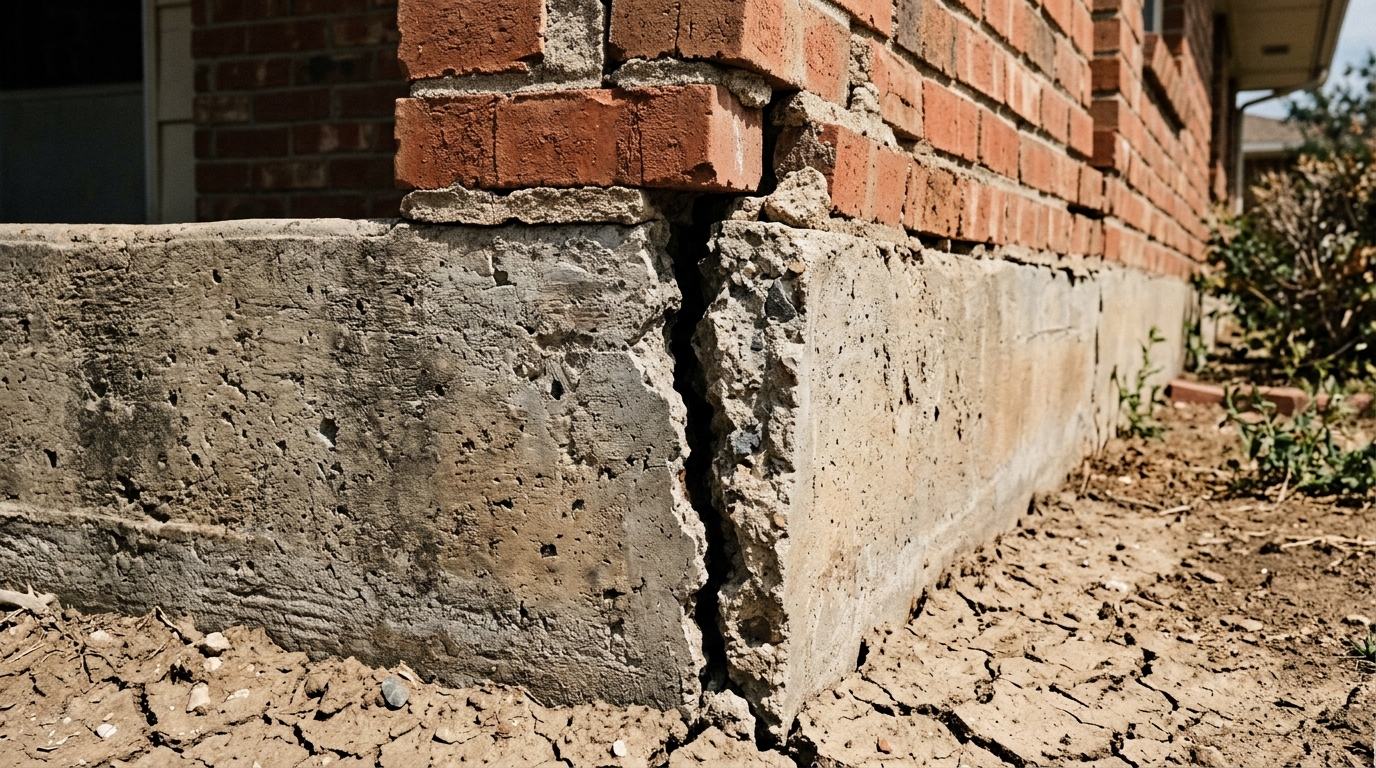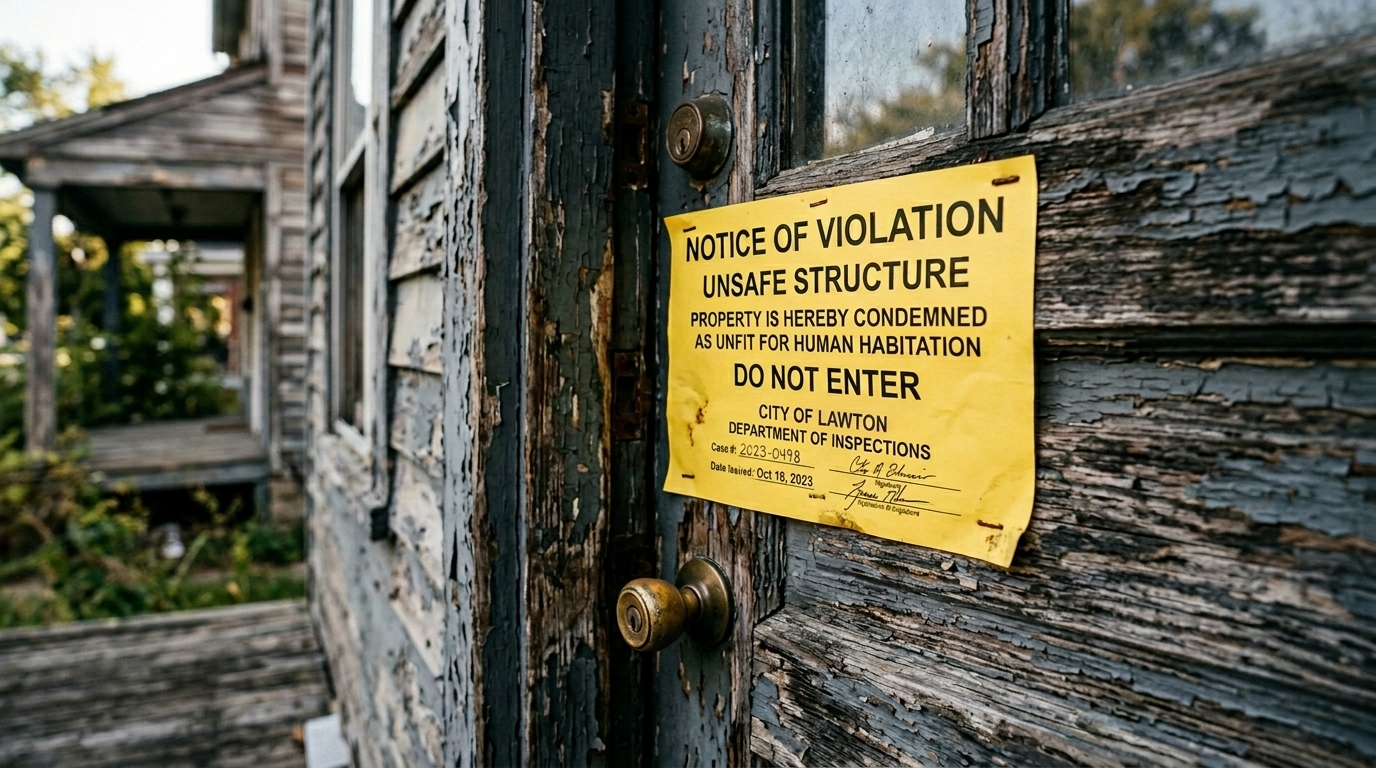
Owning a home comes with an unwritten agreement to maintain the structure in compliance with local city ordinances and safety regulations. Over time, due to financial constraints, unexpected life changes, or prolonged vacancy, a property can fall behind these standards. When code enforcement officers step in, minor issues—like overgrown weeds, broken windows, un-permitted additions, or aging structural systems—can quickly escalate into a legal and financial nightmare of formal code violations.
For property owners in North Texas and Southwest Oklahoma, municipal scrutiny is a highly stressful clock to outrun. Local code enforcement departments are famously aggressive about keeping neighborhoods up to standard, and they do not hesitate to issue compounding daily fines or place liens on your property title.
When a home accumulates a laundry list of municipal citations, many owners look to sell the property through a traditional real estate agent to escape the building pressure. However, trying to list a property with active code violations on the open retail market is an incredibly difficult hurdle. Let’s look at the realities of listing a cited property and explore why selling directly to a local cash home buyer is often the smartest, most stress-free path to a clean slate.
The Bureaucratic Trap of the Traditional Real Estate Market
Hiring an agent to place a code-compromised home on the Multiple Listing Service (MLS) pits your property against pristine listings. For a home that has active city citations or un-permitted structures, the conventional retail pipeline breaks down due to three massive hurdles:
1. The Title Cloud and Fee Accumulation
Active code violations frequently result in municipal liens recorded against the property’s title. When you list a home traditionally, a title company cannot clear the transaction for a retail buyer until every single lien is paid in full and the city formally signs off on the compliance.
If you have daily fines that have been compounding for months, the payoff amount can completely eat away your remaining home equity. Many retail buyers will walk away the moment a title search reveals a clouded, legally messy history.
2. The Financing Blackout
The vast majority of everyday home buyers rely on conventional, FHA, or VA mortgages to purchase a home. Here is the problem: traditional mortgage lenders will not finance a home with active building code violations, unsafe structural conditions, or un-permitted major systems.
Lenders require a clean appraisal and a passing home inspection to clear a loan. If an appraiser notes an unsafe electrical system, a compromised foundation, or a structure labeled “Uninhabitable” by the city, the underwriting department will reject the file instantly. This completely eliminates 90% of retail buyers, leaving only cash investors as viable candidates.
3. The Contractor Coordination Money Pit
To salvage a traditional listing, your real estate agent may suggest that you hire contractors to bring the home up to modern building codes before putting it on the market. However, pulling municipal permits to fix old code violations forces you to open your doors to city inspectors.
Once an inspector enters an older property, they frequently flag additional, secondary code deficiencies—such as outdated plumbing or missing hardwired smoke alarms—mandating that you upgrade the entire house. What began as a simple $3,000 fix can easily turn into a $20,000 structural overhaul that you must fund completely out of pocket.
Real-World Case Studies: Listing vs. A Direct Cash Sale
To truly see the benefit of skipping the traditional real estate agent track, let’s examine two contrasting real-world scenarios based on common market experiences in our primary territories.
Case Study A: The Traditional Listing Citation Nightmare (The DFW Metroplex)
A homeowner in the Dallas/Fort Worth area inherited a property that had an un-permitted back patio conversion and a severely deteriorated roof. The city issued a series of structural code violations, and fines were accumulating at $100 per day. An agent convinced them to list it on the MLS to see if a buyer would take it on as a “handyman special.”
- Month 1–2: The home hits the market. Because the bright orange city citation notice is taped to the front window, retail buyers walk out immediately.
- Month 3: An investor makes a conventional offer but insists that the seller clear the code violations before closing. The homeowner calls local contractors and learns that bringing the un-permitted conversion up to modern city code will cost $12,000 out of pocket.
- Month 5: While the seller scrambles to find the money, the compounding daily fines add another $6,000 to the city lien balance. The initial buyer grows tired of the administrative delays and cancels the contract.
- Month 7: After more than half a year of paying double housing costs, dealing with city inspectors, and watching their equity erode, the owner accepts a low-ball offer from a cash buyer that is far less than what they could have netted months earlier without the out-of-pocket expenses.
Case Study B: The Swift Cash Resolution (Lawton, Oklahoma)
A property owner in Lawton, Oklahoma, owned a vacant property that had fallen into severe disrepair, resulting in code violations for broken windows, structural siding decay, and overgrowth. The owner did not have the physical stamina or financial means to battle municipal code courts or manage construction crews from afar.
- Day 1: The owner contacts a direct cash home buyer via a simple online form.
- Day 2: A local property coordinator reviews the neighborhood data and performs a rapid, non-invasive walkthrough to assess the repair scope and violation list.
- Day 3: The cash buying company presents a firm, clear all-cash offer. The price accounts for the municipal fine settlement, permit pulling, and reconstruction costs internally, requiring $0 from the seller’s pocket.
- Day 5: The owner accepts the offer. Because the company uses its own liquid capital, no bank approvals, structural code clearances, or mortgage appraisals are required to clear the file.
- Day 12: The transaction closes smoothly at a reputable local title company. The cash buyer pays off the city liens directly out of the sale proceeds, and the seller walks away with cash in hand, completely free from the threat of city legal action.
Why Selling to a Direct Cash Buyer is Your Best Strategy
When you sell your code-compromised property directly to an established investment company like ours, you bypass the entire stressful ecosystem of traditional real estate. We specialize in taking on the municipal and structural risks that terrify everyday retail buyers:
We Buy 100% As-Is (Leave the City Code Violations to Us)
When we say we buy houses completely as-is, we truly mean it. You do not need to hire contractors, pull expensive permits, deal with city inspectors, or fix a single citation. If the entire property requires structural stabilization or system overhauls to satisfy city code enforcement after the purchase, that is entirely our financial problem, not yours. Take what you wish to keep, leave the legal and physical mess behind, and let our teams handle the city compliance.
Zero Out-of-Pocket Commissions or Closing Costs
When listing a home with an agent, roughly 6% of the final sale price goes to real estate commissions, and another 2% to 3% goes toward buyer closing costs and title fees. When your property’s value is already impacted by code citations and accumulated fines, losing another substantial chunk to transaction fees cuts deep. We charge zero commissions and cover all standard closing costs, ensuring you keep the exact amount of cash promised in our offer.
Bypassing Project Creep and Municipal Risk
Water, structural, and electrical code issues are rarely superficial. If a city inspector mandates an upgrade halfway through a repair project, your construction costs can double instantly. When you sell to us, we take on 100% of the municipal and construction risk. Any surprise fines or code requirements found after closing are our financial problem, not yours.
Take Control of Your Property Exit
A city code violation shouldn’t hold your financial future hostage or cause endless sleepless nights. You do not have to let a slow-moving traditional real estate market or expensive repair contractors dictate your recovery timeline.
If you are ready to skip invasive home inspections, avoid the nightmare of out-of-pocket construction bills, and sell your property on a timeline that you control, a direct cash sale is your cleanest path forward.
To see exactly how our direct buying model eliminates the middleman and learn more about our transparent valuation structure, take a moment to review our comprehensive guide detailing reputable home buying programs and how they work. We lay out all the operations clearly so you can make an empowered decision.
For homeowners dealing with municipal citations or repair issues in North Texas, you can connect directly with our regional acquisition team by visiting our trusted real estate investors page for the DFW area for a rapid, hassle-free property evaluation. If your property is located across the Oklahoma border and requires localized expertise, our team is ready to provide a direct solution through our dedicated home buying company in Lawton.
You don’t have to wade through the stress of a compromised house alone. Let us buy the property as-is, take on the structural and municipal risks, and put cash in your pocket so you can step into your next season of life with absolute certainty.